
Average Reading Speed Guide
Learn the average reading speed in words per minute, how long it takes to read 1,000 words, what affects reading time and how to improve reading efficiency.
Quick summary
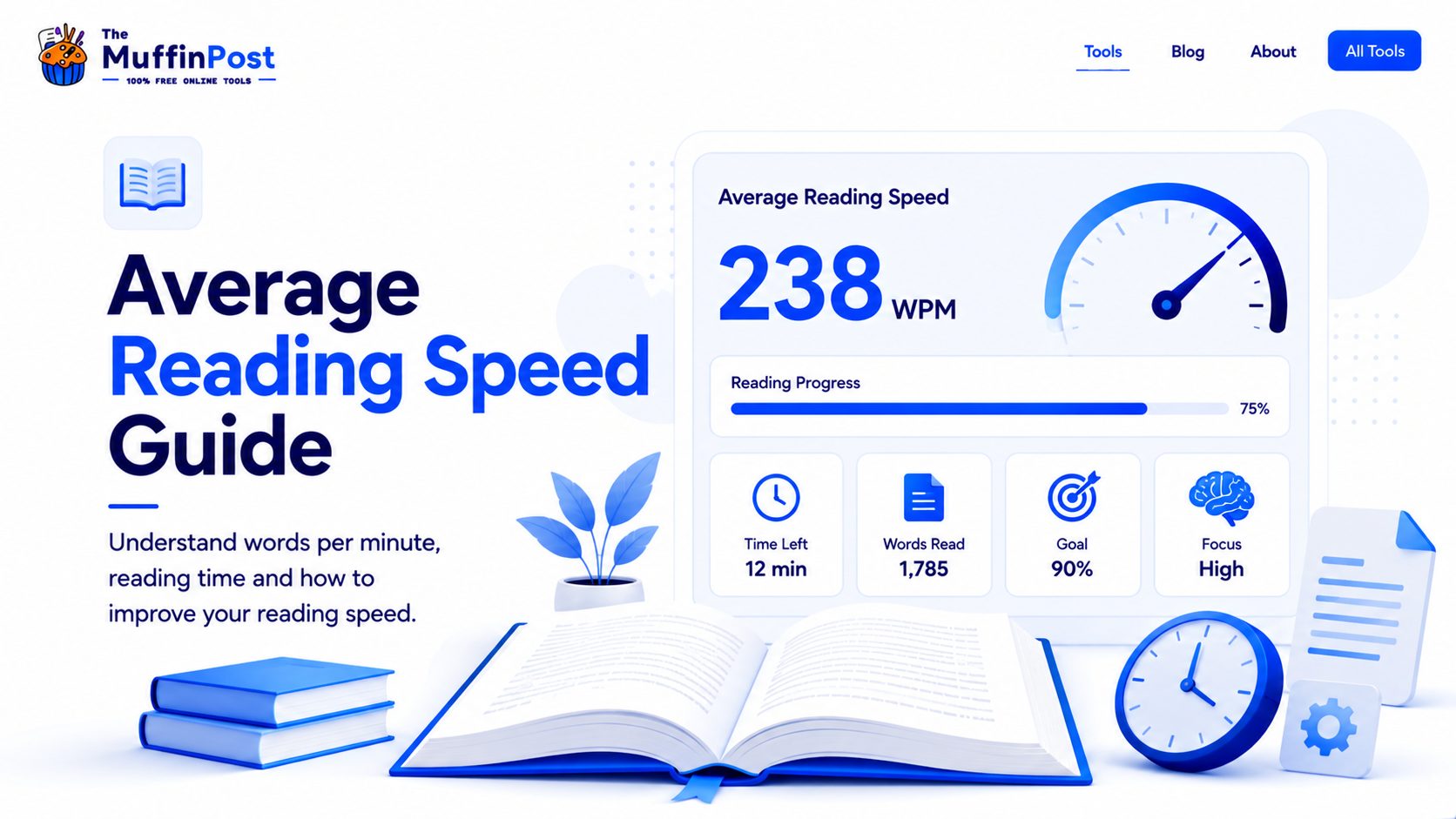
The average adult reading speed is usually around 200 to 250 words per minute for normal comprehension. That means 1,000 words usually takes about 4 to 5 minutes to read. Reading speed changes depending on age, vocabulary, text difficulty, focus, screen format and reading purpose.
Key takeaways
- Most adults read around 200 to 250 words per minute.
- 1,000 words usually takes about 4 to 5 minutes to read.
- Complex text, distractions and poor focus can slow reading speed.
- Use a Reading Time Calculator to estimate how long your text takes to read.
What is the average reading speed?
The average reading speed for adults is usually between 200 and 250 words per minute when reading standard content with good comprehension. Some readers move slower, especially with technical or academic material, while experienced readers may read faster when the text is familiar.
For everyday reading, it is better to focus on understanding than speed alone. Reading faster is useful only if you still remember and understand what you read.
Common reading speed ranges
- Slow reader: 100 to 150 WPM.
- Average reader: 200 to 250 WPM.
- Good reader: 250 to 350 WPM.
- Fast reader: 350 WPM or more.
Average reading speed by group
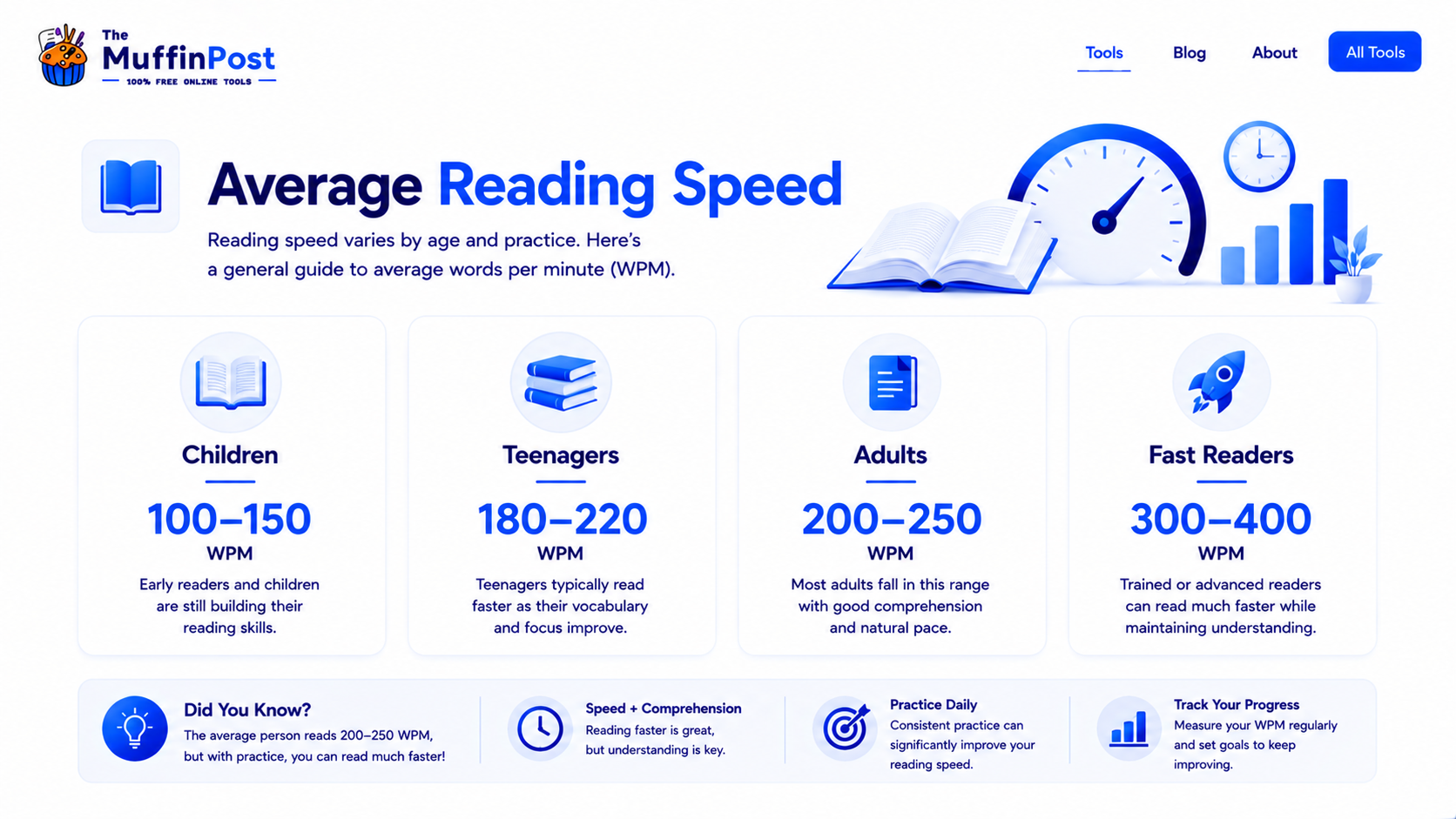
Reading speed is not the same for everyone. Children, teenagers, adults and advanced readers often read at different speeds because vocabulary, experience and attention levels change over time.
| Reader type | Average speed | Notes |
|---|---|---|
| Children | 100–150 WPM | Reading speed depends strongly on age and practice. |
| Teenagers | 180–220 WPM | Speed improves with vocabulary and school reading habits. |
| Adults | 200–250 WPM | Common range for standard articles and everyday content. |
| Fast readers | 300–400+ WPM | Possible with practice, familiarity and strong focus. |
Complete reading speed workflow
Measure your current reading pace, estimate time accurately and improve gradually without sacrificing comprehension.
Measure the Text
- Paste the text
- Count total words
- Choose a sample
- Prepare a timer
Estimate Reading Time
- Enter word count
- Select reading speed
- Review duration
- Plan the session
Practice Efficiently
- Read without distractions
- Track comprehension
- Repeat regularly
- Compare progress
Protect Comprehension
- Avoid rushing
- Slow down for complexity
- Take short breaks
- Review key ideas
Reading time chart by word count
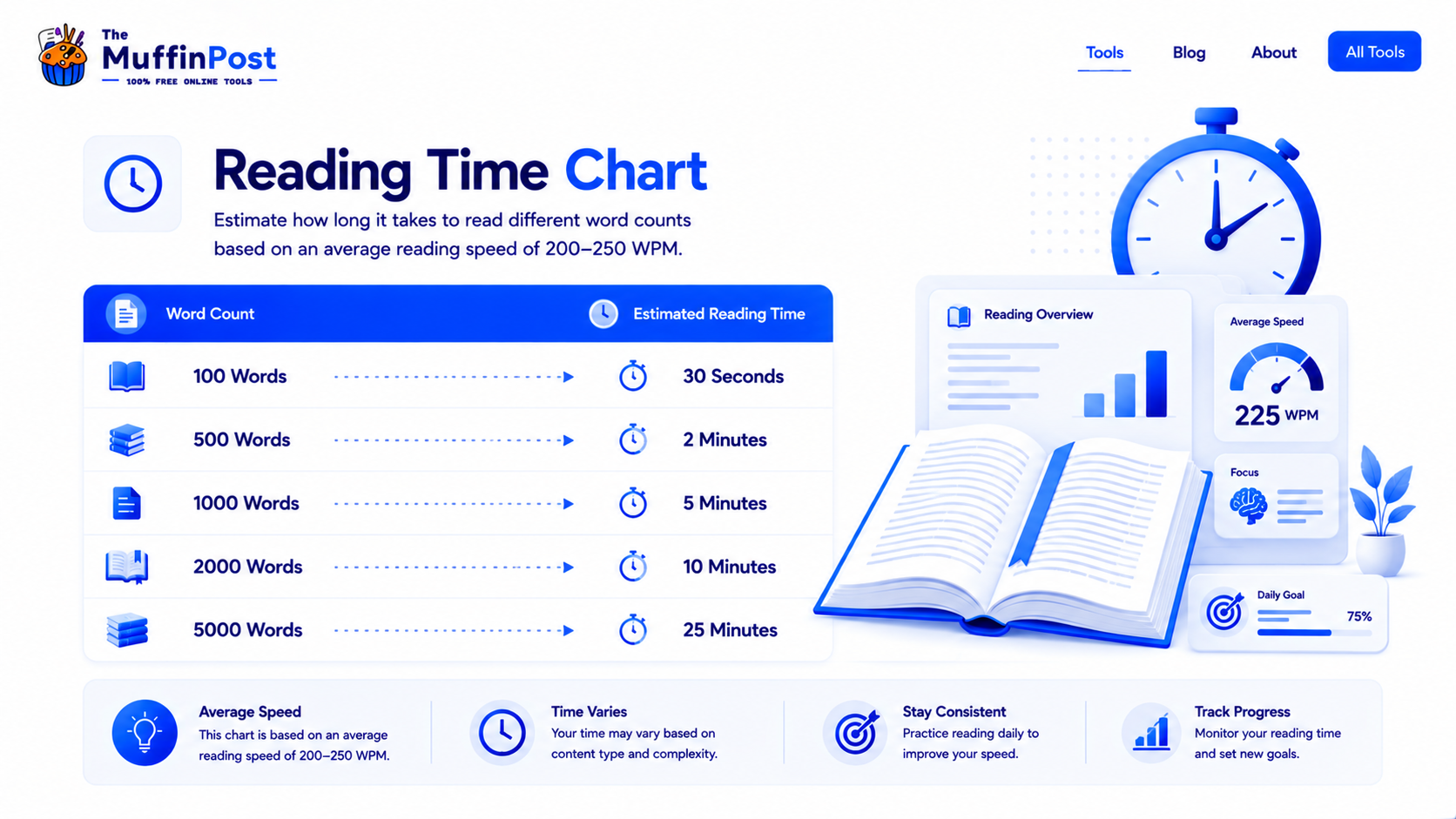
If you know the word count of a text, you can estimate reading time by dividing total words by reading speed. For a general audience, using 200 words per minute is a safe estimate.
| Word count | Estimated reading time | Common content type |
|---|---|---|
| 100 words | 30 seconds | Short caption or intro |
| 500 words | 2–3 minutes | Short article or email |
| 1,000 words | 4–5 minutes | Standard blog post |
| 2,000 words | 8–10 minutes | Long guide |
| 5,000 words | 20–25 minutes | Essay, report or chapter |
What affects reading speed?
Reading speed is affected by more than just how fast your eyes move. Text difficulty, vocabulary, focus, screen size, lighting and your goal all change how quickly you can read and understand information.

Text difficulty
Technical, legal, academic or medical content usually takes longer to read than simple blog content.
Concentration
Distractions, multitasking and notifications can slow reading and reduce comprehension.
Reading purpose
Skimming, studying and deep reading all require different speeds and attention levels.
Common reading speed mistakes
Reading faster is not always better. If speed reduces comprehension, you may need to reread the same paragraph again, which wastes time instead of saving it.
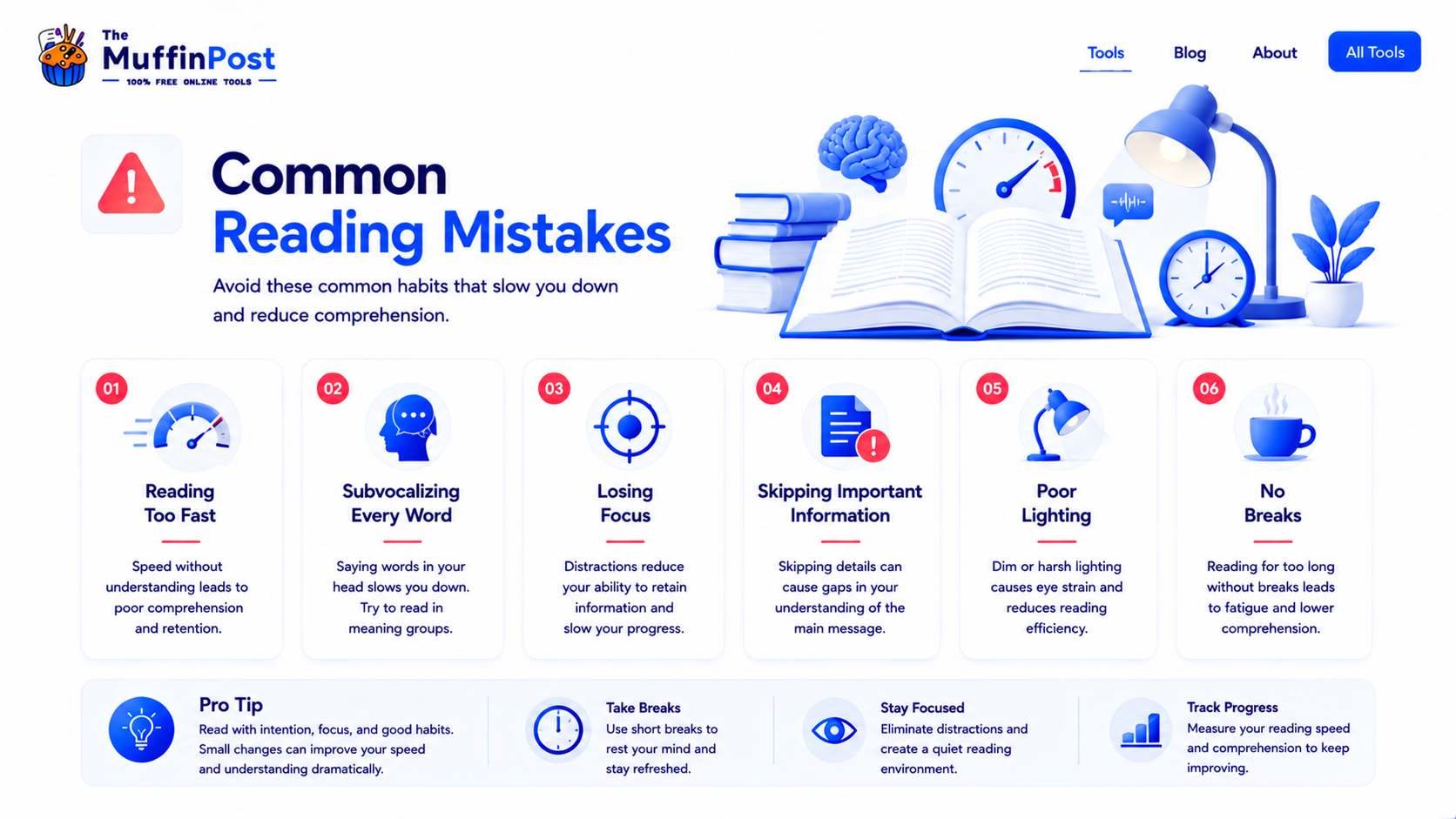
Speed without comprehension is not useful. Slow down when the text is important or complex.
Headings, introductions and examples often help you understand the main idea faster.
Long reading sessions without breaks can reduce focus and retention.
How to improve reading speed
You can improve reading speed with consistent practice, better focus and smarter reading habits. Start by measuring your current speed, then work on comprehension and pacing gradually.
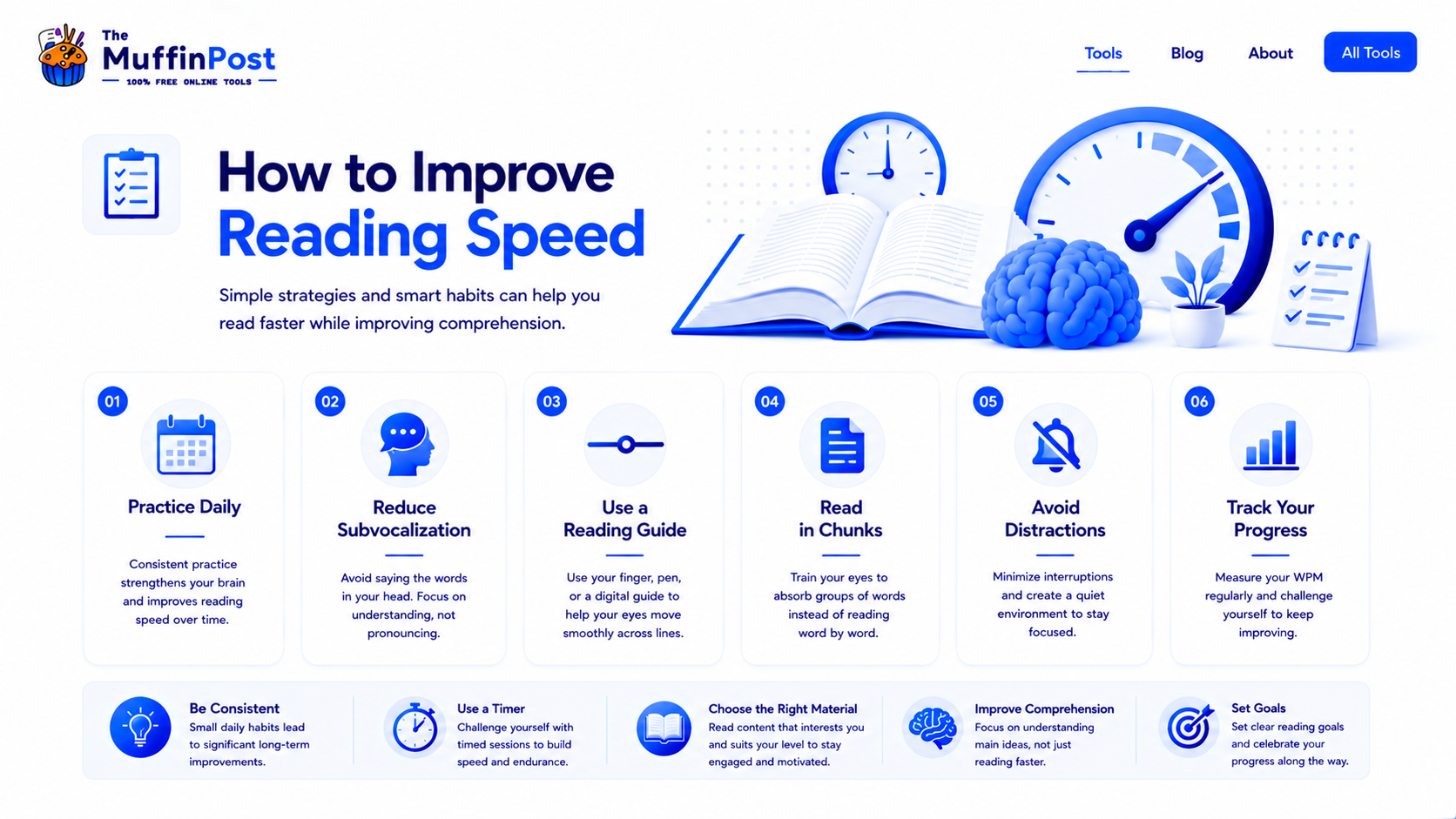
Practice daily
Regular reading improves vocabulary, pattern recognition and confidence.
Reduce distractions
Reading in a quiet environment helps you maintain a steady rhythm.
Track progress
Measure word count and reading time to understand your real pace.
Start here: estimate reading time
Enter your text or word count, choose a reading pace and see how long the content will take to read.
Open Reading Time CalculatorOpen Word CounterText and Reading Learning Center
Continue with practical guides for reading time, word count and better content workflows.
Frequently asked questions
What is the average reading speed?
The average adult reading speed is usually around 200 to 250 words per minute for standard content.
How long does it take to read 1,000 words?
At average reading speed, 1,000 words usually takes about 4 to 5 minutes to read.
Is 300 words per minute fast?
Yes. Reading 300 words per minute is faster than average, but it is still realistic for experienced readers with good focus.
Does reading faster reduce comprehension?
It can. Reading too fast may reduce comprehension, especially with complex or unfamiliar material.
What affects reading speed the most?
Text difficulty, vocabulary, focus, reading experience and reading purpose are major factors.
How can I calculate reading time?
Divide the total word count by your reading speed in words per minute, or use a Reading Time Calculator.
Can I improve my reading speed?
Yes. You can improve by practicing regularly, reducing distractions, expanding vocabulary and tracking your progress.
Which tools help with reading speed?
Useful tools include a Reading Time Calculator, Word Counter and Character Counter.

About the author
The MuffinPost Editorial Team creates practical guides for online tools, productivity, file conversion, calculators, marketing workflows and developer utilities.
Estimate reading time more accurately
Count the words, choose a realistic reading pace and plan your content around the audience.
Calculate Reading TimeBrowse Text Tools